Sunday, December 22 at the Mar Vista Farmers Market
Master Gardeners
’Tis the Sunday before Christmas, and all through the house,
Where Nature and Humanity Connect
|
You may have heard about the 600+ acres of the Ballona Wetlands just to the south and west of Mar Vista. But have you visited this wild habitat where so many wildlife species and rare plant populations still thrive? One imperiled bird species that our former neighbor and beloved Councilmember Bill Rosendahl loved, is the beautiful White Tailed Kite, which needs the upland areas where small mammals live just beneath the surface and provide great meals for the Kite, as well as for Great Blue Herons and several raptors.
| Image Courtesy of Craig Butler |
|
| Great Egrets* |
Biologist Roy Van de Hoek (perhaps you know him from the Feathers & Foliage walks in Mar Vista or have seen his Blue Bird houses in our trees) and Marcia Hanscom, Executive Director of the Ballona Institute ,will be on hand to talk with you. Ballona Institute is known as "The Voice for Nature on the Los Angeles Coast."
| Image Courtesy of Craig Butler |
| Let nature help with the holiday menu. Use locally grown seasonal produce.
Thanksgiving can be a time of coming together and strengthening bonds. Sometimes that means setting aside differences and focusing on inclusion. This often means making sure that there are foods for everyone. If you are a guest at someone's home, why not offer to make one side dish where you can introduce the other guests to some of your favorite vegan delicacies? A hearty root vegetable puree or tofu or tempeh stew will be very welcome this as we experience a California winter. Maybe you can provide a dairy-free dessert ... great for folks who also keep Kosher.
But it's not just about the food. Consider how you will shop and deal with leftovers to shrink your carbon footprint. Get support year-round from the Zero Waste Chef.
Perhaps the biggest share you can offer is preparing your own heart. We are living in times of change, chaos and stress, and no act of kindness is wasted. I will leave you with a quote attributed to Mahatma Gandhi which I found in, of all places, the astrology section of the Los Angeles Times! (Hey, it's right next to the crossword puzzle.)
"To give pleasure to a single heart by a single act is better than a thousand heads bowing in prayer."
Happy Thanksgiving and Beyond!
|
| Harlequin Beetle |
Transition Mar Vista and Bridging Transitions invites you to join us Sunday November 3rd, at the Green Tent, in becoming more aware and creative in how we deal with death.
Honoring the human life cycle and honoring the earth can go hand in hand, so let's find ways to green our final footprint. While dedicated to sustainable living, the green movement has been slow to address how our dying impacts the environment. In the US we bury 20 million feet of wood for caskets, 1.6 million tons of concrete and 4.3 million gallons of embalming fluids containing formaldehyde, a known carcinogen, every year! And cremation, often thought of as a green alternative to burial, has a significant carbon footprint as well as lacing our air with other pollutants such as mercury.
Come learn about Green Burial, at Sea burial, and new more earth friendly options coming online. Drop by for a chat, information and resources, and participate in creative ways to honor our dead and our own legacy to nature.
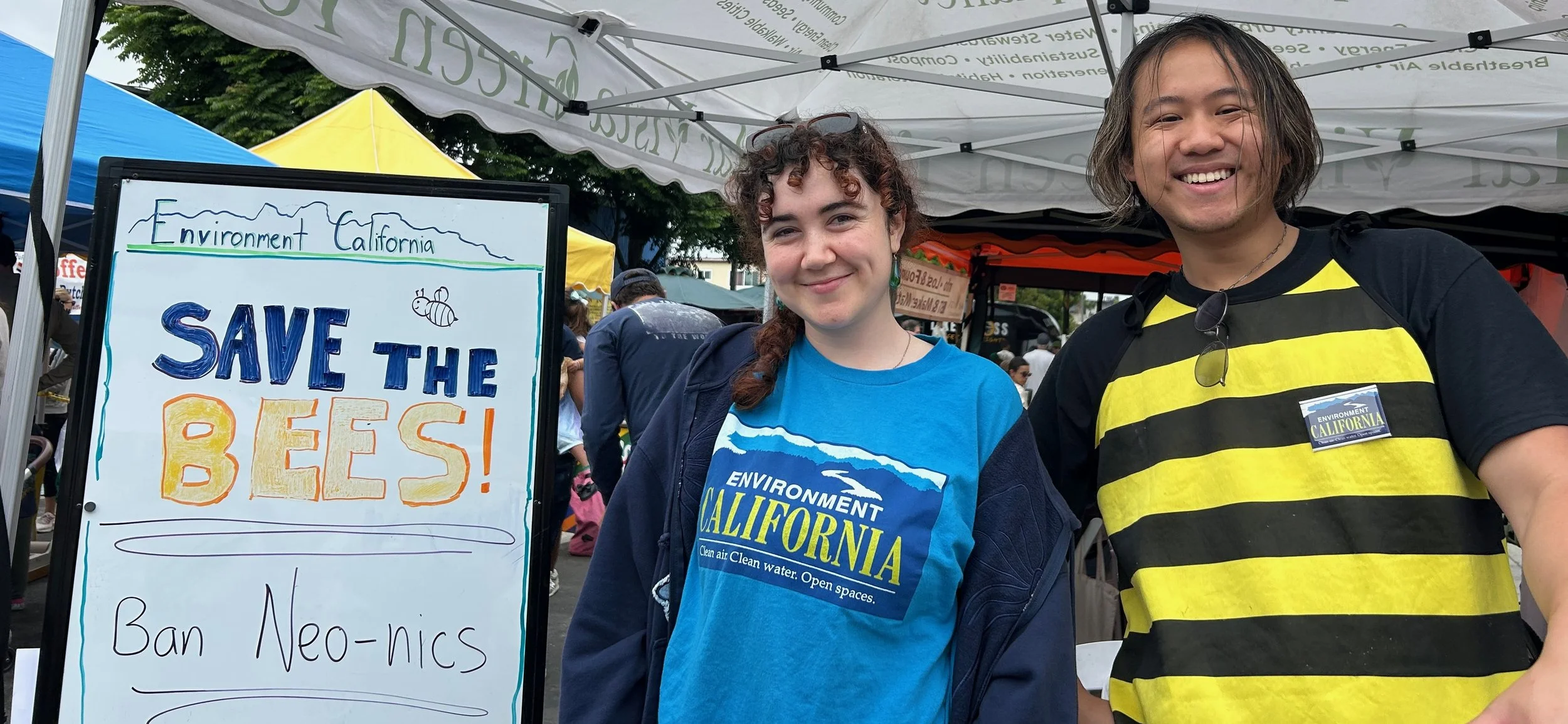
In just 2 minutes you can complete an action step toward saving the bees and other pollinators.
The Problem:
A critical problem affecting the bees is that they are increasingly exposed to a relatively new class of pesticides called neonicotinoids (neonics). These chemicals have been used in exponentially increasing quantities in the last few years and studies definitively link loss of bees to exposure to neonics. Some bees experience acute toxicity from directly sprayed crops and die right away, while others are chronically exposed as they collect pollen from flowers grown from neonics-treated seeds.
Neonics are neurotoxins. In addition to weakening bee immune systems and making them more susceptible to disease, the neonics disorient the bees meaning they can’t find their way back to their hives. And unfortunately the NIC in neonics acts just like nicotine in cigarettes – it can be addictive to bees. So bees are exposed and then go back and back again to plants that have been treated, increasing their exposure and speeding up the die off.
The Solution
To fully save the bees we need to phase out and then ban the use of neonics and we need to ensure that they are not replaced with equally or more dangerous chemicals. Common sense alternatives exist, like altering the time of planting and watering, and planting more native species, but big big agrichemical companies like Monsanto, Dow Chemical, Bayer and Syngenta are fighting to prevent bans.
Thankfully, many legislative bodies have already begun the process of removing this deadly chemical from our lands. The European Union has banned several of them; the U.S. Fish and Wildlife Service has committed to phasing them out on the public lands they manage; and cities like Seattle and states like Maryland and Connecticut have taken action as well.
In order to restore bee populations to health and save our food supply, we need states and cities to ban the sale of bee-killing pesticides. In California, we’re focused in particular on closing the loophole that has allowed companies to continue to sell neonics-coated seeds, an issue the state is required to address with new legislation proposals by February of 2026. And on a local level, we’re looking to expand the number of “Bee Friendly” cities and campuses across the state.
How?
With many strategies including
Petitions
Press conferences
Lobbying with statewide leaders
Volunteering
Canvassing
Organizational History:
Our partner groups Environment America and U.S. PIRG both have a history of working on pesticides and bee-killing pesticides. Environment America has organized chefs and restaurateurs in support of a Bee Friendly Food Alliance. And U.S. PIRG has a long history of working on pesticides, mostly from a public health perspective, and in this case from a food supply perspective. The last time this campaign was run in California, we got several universities and cities registered as “Bee Friendly”, and got legislation passed to ban the commercial sale of neonics sprays in private gardens.
.
| REDUCE FOOD WASTE |
| SAVE ENERGY |
| PLANT TREES |
| CONSERVE WATER |
| Mona Lisa" by artist Zebi |
| "Marina" photo by Marina Andrade, |
| Save Water Eat Lower on the Food Chain |
No comments:
Post a Comment